
People are reproducing less. Why?
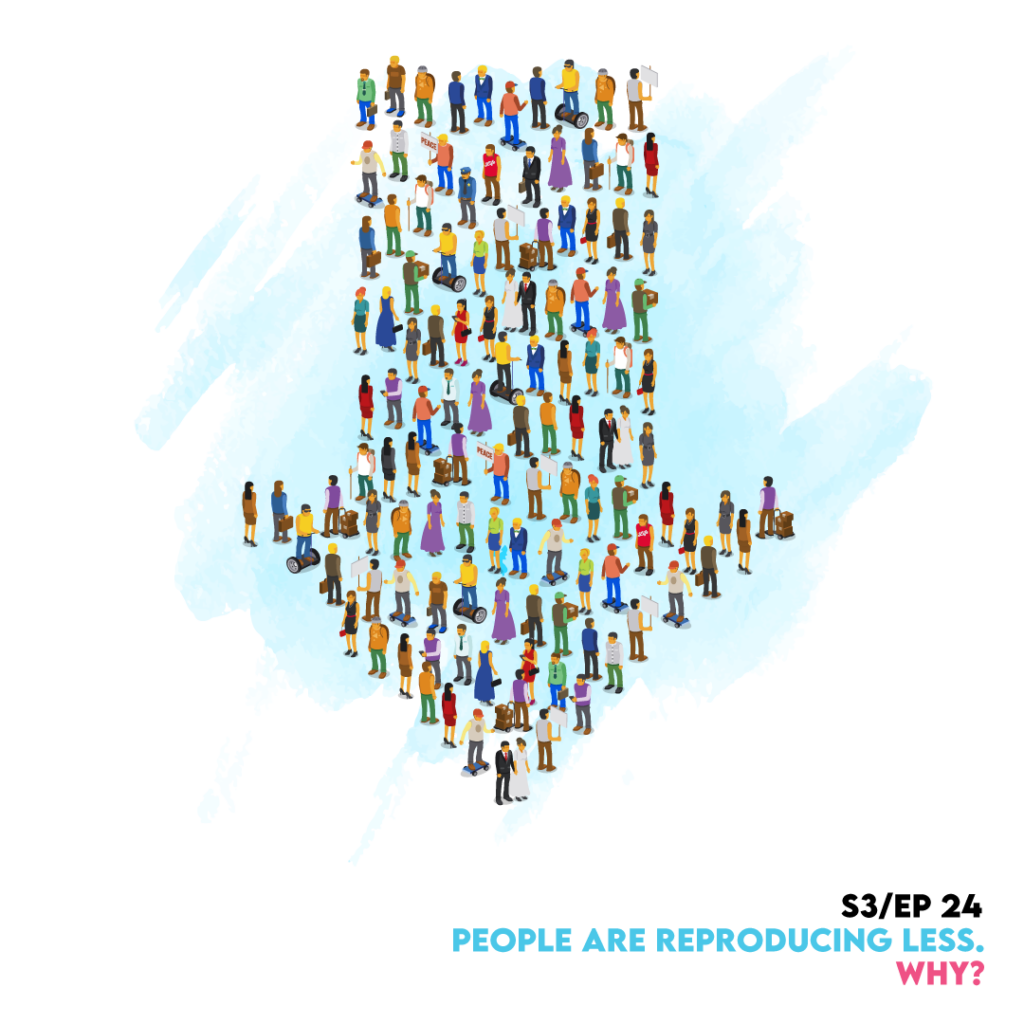
What happens to language and culture when the world starts running out of people?
The global fertility rate has fallen from 5.0 births per woman in the 1960s to just 2.2 today. Researchers project it will drop to 1.59 by 2100, well below the 2.1 replacement level needed to sustain a population. In more than 1 in 10 countries, fertility is already below 1.4. South Korea recorded 0.72 in 2023. Some nations are on track to lose half their population within a century.
These aren’t abstract statistics. They describe the communities that need interpretation services, the school districts that depend on multilingual support, the healthcare systems that rely on language access to function. Demographic shifts are industry shifts, and this one is already underway.
In this episode, Melissa and Richard explore the Birthgap documentary by data scientist and demographer Stephen J. Shaw, filmed across 24 countries, along with supporting research from the Lancet, the UN, and the Institute for Health Metrics and Evaluation.
Topics covered:
– Why birth rates are declining, and who it’s really affecting
– The finding that 80% of childless people didn’t plan to be
– Which countries are hardest hit and what the consequences look like on the ground
– What depopulation means for language communities, migration patterns, and multilingual services
– Whether there’s reason for optimism
This is one of the most consequential demographic stories of our time. It also directly shapes the work we do in language services every day.
Resources mentioned:
Birthgap Documentary (Part 1): https://www.youtube.com/watch?v=m2GeVG0XYTc
Additional resources: https://www.youtube.com/watch?v=_vJLwUThQQU