
THE MELTING POT THEORY, A.K.A. HOW TO INTEGRATE NEWCOMERS INTO A SOCIETY PART 1
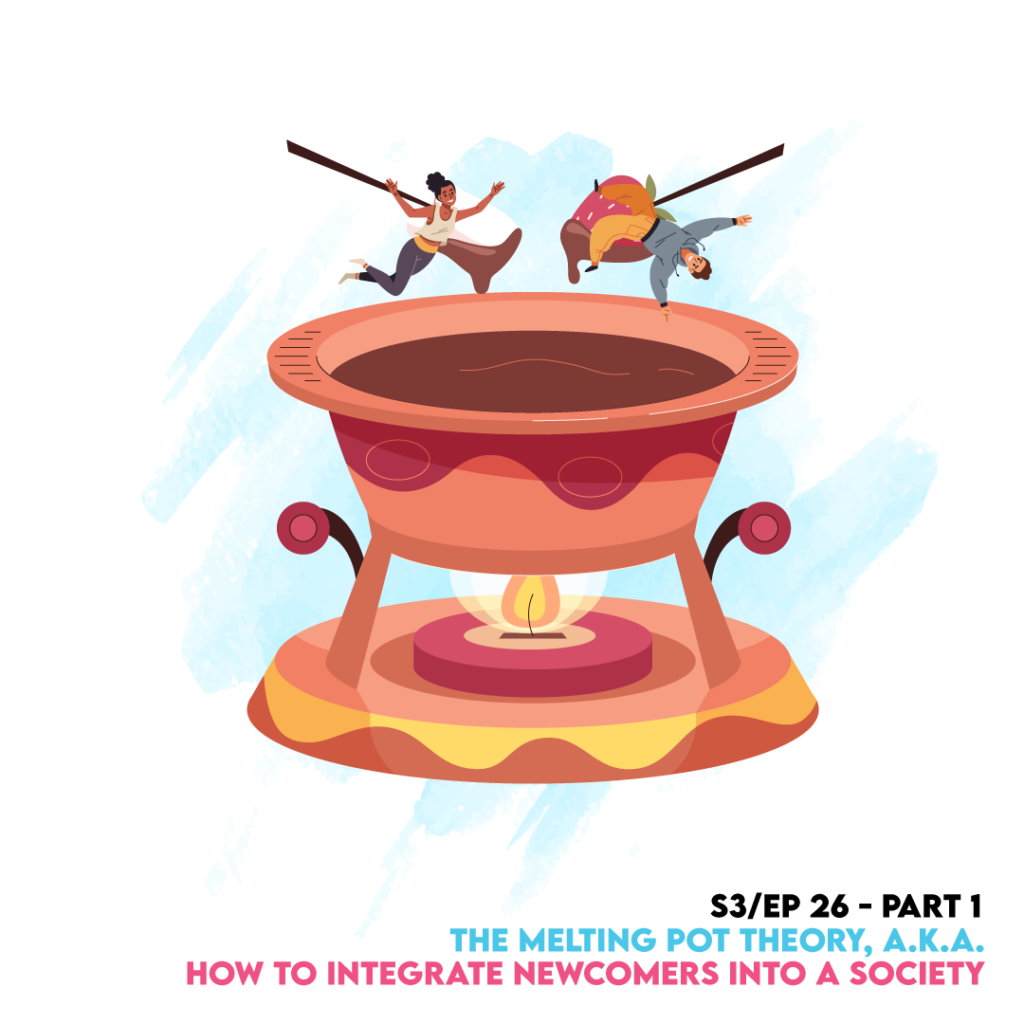
Season 2 Finale, Part 1: Melting Pot vs. Mixed Salad — The Theory Behind the Table
What does it mean to belong somewhere that wasn’t built for you?
That question has driven immigration policy debates for over a century — and it always comes back to two competing models, both expressed, tellingly, through food.
The Melting Pot says that the goal of immigration is assimilation: that people from different cultures, languages, and backgrounds blend together over time into a unified national identity. It’s an optimistic vision — one that powered the American immigration narrative for generations.
The Salad Bowl — also called the Mixed Salad or Tossed Salad model — pushes back. It argues that assimilation is a form of erasure, that the “pot” has always been seasoned by the dominant group, and that a healthier model allows every cultural ingredient to retain its integrity while contributing to a richer whole.
In Part 1 of the Translate This! Season 2 finale, co-host Richard lays the groundwork: the history of both theories, the academic debate between them, and the deeper questions about power, identity, and language that neither metaphor fully resolves.
This episode explores:
The origins of the Melting Pot theory and its role in shaping American immigration ideology
How the Salad Bowl emerged as a critique — and what it gets right that the Melting Pot misses
The academic literature on assimilation and integration, including the role of dominant culture in defining the terms of belonging
Why language sits at the center of both models — and what it means for multilingual communities
The blind spots in each theory, and the questions that set up Part 2
Sources & Links:
The Melting Pot vs. The Salad Bowl (Notre Dame Black & Green Atlantic): https://sites.nd.edu/blackandgreenatlantic/2020/02/21/the-melting-pot-vs-the-salad-bowl/
Melting Pots and Salad Bowls (Hoover Institution): https://www.hoover.org/research/melting-pots-and-salad-bowls
🎧 Listen below — and catch Part 2 for the real-world test case that brings everything into focus.